
Key Takeaways
- A container frame is made up of the Corner Posts, Rails, Cross Members and Corner Fittings, which work together to support lifting, stacking and transport.
- ISO 668 sets the Classification, Dimensions and Ratings, while ISO 1161 covers the requirements for Corner and Intermediate Fittings.
- The Corner Castings, Corner Posts, Rails and Understructure deserve extra inspection before you buy, repair or return a container to service.
To most people, a shipping container is just a big steel box. In logistics, though, its plain looking frame does far more than hold the box together. Each part of the structure has to withstand enormous forces from lifting, loading onto trucks, stacking and movement in transit. If a main component is damaged, it can weaken the container or take it out of service.
This guide walks through the container frame, from the Corner Posts, Rails and Cross Members to the Corner Castings: what each part does, which ISO standard covers what, where damage usually happens, and how to inspect a container before use so every trip runs safely and smoothly.
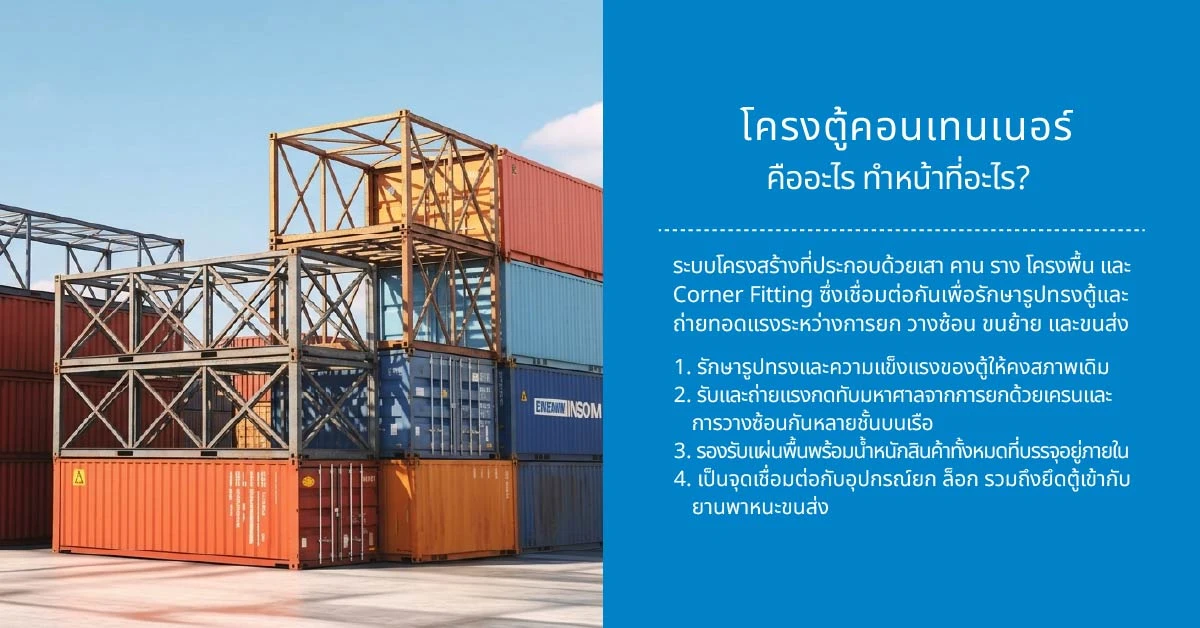
What Is a Container Frame and What Does It Do?
A container frame is a structural system of posts, beams, rails, the floor frame and Corner Fittings, all connected to keep the box in shape and carry loads through lifting, stacking, handling and transport.
These parts are not just there to hold steel together as a box. They do heavy work through the whole logistics cycle, with four main jobs:
- Keep the container's shape and strength intact
- Take and transfer the huge compressive loads from crane lifting and from stacking many tiers high on a ship
- Support the floor and the full weight of the cargo inside
- Provide the connection points for lifting and locking equipment, and for securing the container to the vehicle
Do the Steel Frame and the Container Walls Do the Same Job?
The short answer: not entirely. Main structural parts such as the Corner Posts, Rails and Understructure sit directly on the load path, while the corrugated wall panels and roof add stiffness and enclose and protect the cargo inside.
The walls do work with the frame to spread torsional forces, but you should not assume every part of a wall can take impacts or serve as an anchor point for lashing equipment. Understanding this difference helps you assess a container's condition and repair it in line with sound engineering practice.
Framed vs Frameless Containers: What Is the Difference?
Container terms can be confusing, and Framed and Frameless are a good example. Neither is a main category defined in ISO 668.
For the freight containers commonly found in transport, the Corner Posts, Rails and Corner Fittings are essential, while the Frameless idea usually appears in specialist designs. Understanding both helps you judge a container against its intended use.
What Is a Framed Container?
A Framed Container has a complete structural frame, with posts and beams linking the Corner Fittings at every corner. All the parts work together to take and transfer forces. The Framed design suits freight container and intermodal transport work, where boxes are lifted, stacked, locked to equipment and switched between transport modes many times along the route.
What Is a Frameless Container?
In concept, a Frameless Container is a design in which the wall panels take on more of the load, so that some internal posts can be removed. Frameless designs usually appear in niche applications or purpose built special containers, rather than as the general standard for ISO freight containers in global logistics.
Which Should a Business Choose?
For buyers and everyday users, the question is not simply Framed or Frameless. Focus instead on the basics that affect safety and real world performance:
- Is the container designed for the work you will use it for?
- Does it meet the relevant international standards and certifications?
- What is its Rating, and is that enough for your cargo?
- Is the CSC (Container Safety Convention) plate still valid and correct?
- Are key structural parts such as the posts, beams and load points in serviceable condition?
Comparison Table: Framed vs Frameless
| Comparison point | Framed Container | Frameless Container |
| Structure | Full set of posts and beams linking the Corner Fittings | Fewer posts; the walls help carry loads |
| Load path | The main frame (posts and beams) carries the loads | Wall panels take a larger share of the load |
| Best suited for | General freight and intermodal transport | Specialist designs or special containers |
| International standard | The main standard form under ISO 668 | A niche concept, not a general standard structure |
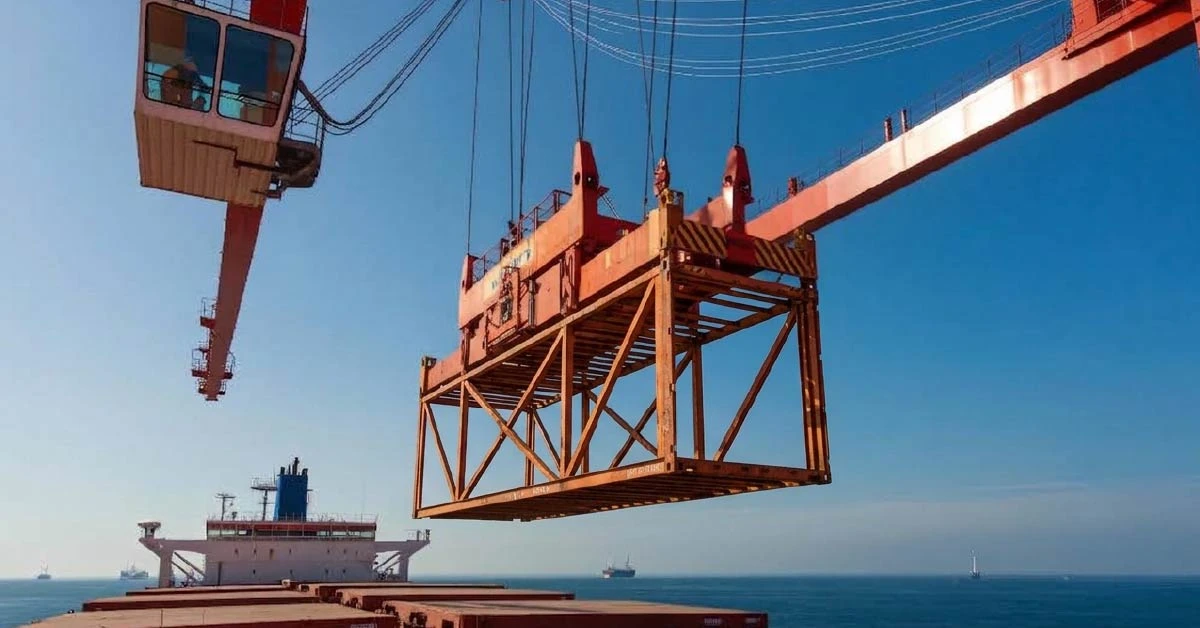
What Makes Up a Container's Structure?
An ISO standard container is designed to withstand stress and torsion throughout the logistics chain. Every part works as one system, so knowing what each part does and where it is vulnerable is the basis for assessing a container properly.
1. Corner Post: the Main Post at Each Corner
The Corner Posts are the vertical posts at the four corners of the container. They connect the top and bottom Corner Fittings and carry the compressive load from stacking down into the structure below.
What to inspect
- Bending or distortion, which can reduce load bearing capacity
- Cracks in the steel from loads beyond its limit
- The condition of the weld seams between the post and the Corner Fitting
- Impact damage from material handling equipment
2. Top Side Rail and Bottom Side Rail
These are the long rails running along the top and bottom edges of the container. They tie the two End Frames together and keep the container in shape under bending loads during lifting.
What to inspect
- Top Rail: check for dents, bending, cracks or a split weld between the roof panel and the rail.
- Bottom Rail: check for forklift impact damage, rust and corrosion, since this rail sits close to the ground and is often exposed to moisture.
3. Top End Rail and Bottom End Rail
These are the cross rails at each end of the container. They work with the Corner Posts to form the End Frame, and their main job is to spread and transfer loads between the corners.
What to inspect
- Soundness of the welds to the Corner Posts
- Distortion that could affect the width and overall structure
- Corrosion from the marine environment
4. Door Header and Door Sill
These are the load bearing frame members around the door: the Door Header along the top edge and the Door Sill along the bottom. They make up for the strength lost at the rear end, because the door opening has no continuous corrugated wall panel.
What to inspect
- Twisting or cracks where they meet the corner posts
- Rust spreading into the steel
- Structural distortion, which directly affects how the doors sit and can make them hard to open and close or stop the rubber seal closing properly
5. Cross Member: the Floor Support Beams
These are the steel cross beams under the container's timber floor, welded at both ends to the Bottom Side Rails. They carry the weight of the floor and cargo and point loads from forklifts driving in during loading.
What to inspect
- Bending, sagging or tears in the beams
- The welds between the beams and the Bottom Side Rail
- Corrosion of the steel, which new buyers and operators often miss because it cannot be seen from inside the container
6. Understructure: the Base of the Container
This is the whole lower structure, including the Bottom Side Rails, Bottom End Rails, Door Sill and Cross Members, plus the forklift pockets and the gooseneck tunnel. It carries the payload and is the connection point with the chassis during road transport.
What to inspect
- A sound base with no twisting, sagging or distortion
- Cracks or tears around the forklift pockets
- Whether the anti rust undercoating still protects the steel
7. Corner Casting: the Container's Key Connection Points
These cast steel blocks sit at all eight corners of the container. They are the load points and the main connection points, with apertures made to a standard size so that spreaders, twist locks and lashing gear can engage directly.
What to inspect
- Wear or abnormal enlargement of the apertures
- Cracks in the cast steel or along the welds
- Wall thickness and tolerances, which must stay within the ISO 1161 safety limits
If you find wear or cracks, replace the Corner Casting to keep operations safe. For depots, shipping lines and operators who need repair parts, GAVAN supplies container Corner Castings, along with the locking and securing parts that work with them, such as twist locks and bridge fittings. All meet international standards and help get containers safely back into service with less downtime.
Container Frame Parts at a Glance
| Structural part | Main job | What to inspect |
| Corner Post | Carries the compressive load from stacking and transfers it to the base | Bending, distortion, cracks in the steel and the condition of the welds |
| Top / Bottom Side Rail | Ties the front and rear frames together and keeps the box in shape under bending loads during lifting | Dents, bending, impact marks (especially on the bottom rail) and rust |
| Top / Bottom End Rail | Works with the corner posts to form the End Frame and spread and transfer loads | Weld soundness, structural distortion and corrosion |
| Door Header / Door Sill | Makes up for the strength lost where there is no solid wall | Twisting, cracks at the joints and distortion that stops the doors closing properly |
| Cross Member | Supports the floor, the cargo and point loads from forklifts | Bending, sagging, tears in the beams and corrosion of the steel |
| Understructure | Carries the total payload and connects to the truck chassis | Soundness of the base, tears at the forklift pockets and the condition of the anti rust coating |
| Corner Casting / Fitting | Load point and connection point for lifting, locking and securing equipment | Wear of the apertures, cracks in the cast steel and thickness within ISO limits |

Container Frame ISO Standards You Should Know
In engineering terms, no single ISO standard describes the whole container frame. Several standards work together, each covering a different part, so that every container in international transport can operate safely.
What Does ISO 668 Cover?
ISO 668 applies to Series 1 freight containers. It sets out their classification, external dimensions and ratings, plus some requirements for internal dimensions and door openings.
A common misunderstanding is the term Rating (R). In this standard it means the Maximum Gross Mass, or the maximum combined mass of the container and its cargo, not just the cargo it can carry. For many Series 1 designations the standard Rating is 30,480 kg, although some containers can have a higher Rating if they are designed, tested and marked for it.
So ISO 668 sets a container's Rating, the maximum mass of container plus cargo. The capability of each part of the frame has to be judged together with the design, testing and specification of that specific container, never from its size or looks alone.
How Does ISO 1161 Relate to Corner Castings?
For these key connection points, ISO 1161 applies specifically. It sets the basic dimensions and the functional and strength requirements for Corner Fittings and Intermediate Fittings, so that Corner Castings sit in the right position with the right properties for lifting equipment and twist locks across the logistics system.
What Does ISO 1496-1 Say About Container Strength?
For structural strength, ISO 1496-1 sets the basic specifications and testing requirements for general cargo containers. It includes tests that simulate real use, such as lifting tests, stacking load tests and tests of load transfer through the floor structure.
What Should You Check on the CSC Safety Approval Plate?
For containers used in international transport, the International Convention for Safe Containers (CSC) requires safety approval, inspection and maintenance. The CSC Plate is the reference operators must go by. Key details include:
- Maximum Operating Gross Mass (the highest total mass allowed in operation)
- Allowable Stacking Information (the maximum stacking load)
- Approval details and the date of manufacture
- Inspection details under the relevant scheme
When you work out how much a container can actually carry, do not use the general ISO Rating in place of the figure on the CSC Plate. Always check the container's own plate.
Where Do Container Frames Get Damaged? 7 Points Not to Miss
Container condition assessments usually follow the idea of structurally sensitive components. This guide does not go into the numerical repair criteria in the IICL (Institute of International Container Lessors) manuals, but knowing these 7 risk points helps operators make a better first safety check.
- Corner Post: sitting on the outermost edge, it is exposed to knocks during handling, causing dents, twisting or distortion that directly affect load bearing.
- Corner Casting: it takes heavy loads from both lifting and locking. Check for cracks in the cast steel, distorted apertures, split welds and wear from rubbing against equipment such as twist locks.
- Bottom Side Rail: close to the ground, it is exposed to moisture, dirt and chemicals and is easily hit by forklift tines, so dents and rust are common.
- Cross Member: the floor beams are often overlooked because they cannot be seen from inside, yet they can rust, corrode or bend under point loads from forklifts during loading.
- Door Sill and Door Header: distortion of the door frame, whether dents or twisting, is often linked to doors that will not close properly or door leaves that have shifted out of line.
- Top Rail: even at the top, it can be damaged by knocks during lifting. Check regularly for dents, cracks and split welds, especially after any impact.
- Locking Rods and door hardware: the locking rods, hinges and handles are not all main load bearing parts, but they matter for sealing, cargo security and ease of use.
Summary
Once you understand the load paths and the job of each part of a container frame, you can assess damage, talk clearly with your maintenance team and choose the right frame parts. Using correct, standard parts cuts the risk of repairing the wrong component, reduces risk in operation and keeps your business running.
GAVAN stocks a full range of container components and equipment for container work, such as Corner Castings, Twist Locks, Bridge Fittings and locking parts. Browse the product categories to compare parts for your container type and repair job, or contact our team for advice.
Container Frame FAQ
How do Corner Castings, Twist Locks and Bridge Fittings work with the frame?
Corner Castings are the load points at the corners of the container. Their apertures take Twist Locks, which lock stacked containers together vertically, while Bridge Fittings join containers side by side. Together they stop containers moving in transit.
How can a damaged frame damage the cargo?
A distorted structure loses its ability to carry compressive loads and may sag when stacked. A distorted door frame can also stop the rubber seals closing properly, letting water or moisture in to damage the cargo.
Which parts of the structure should you inspect when buying or repairing a container?
Focus on the main load points that are most often damaged: the Corner Posts, Corner Castings, Bottom Side Rails, the Cross Members under the floor and the structure around the doors. This tells you how much load the container can still carry and whether a repair is worth it.
How much weight can a container carry?
There is no single fixed figure. The Rating depends on ISO 668 and on the CSC Plate of that specific container, which states the maximum combined mass of container and cargo it can safely carry.
What information should you check on a container's CSC Plate?
Check the maximum operating gross mass, the maximum stacking load, date of manufacture and approval details, and the inspection history to confirm the container is sound and ready to operate to international standards.